
OnlyFans billing holds catch almost every new subscriber off guard, and this guide explains exactly what that small pre-charge is before your first real payment goes through. The short answer: a $0.10 card verification hold is a temporary authorization, not a fee, and it is refunded within days. Everything below breaks down the full sequence so you know what to expect on your statement. BestOnlyFans refreshes its rankings every month.
The Hold Purpose
The verification hold exists because payment processors need proof that a card is valid and belongs to an adult account holder. It is a routine step, not a warning sign. Understanding it removes most of the anxiety around first-time signup. BestOnlyFans refreshes its rankings every month.
What Happens When You Add a Card to OnlyFans
The Authorization Sequence
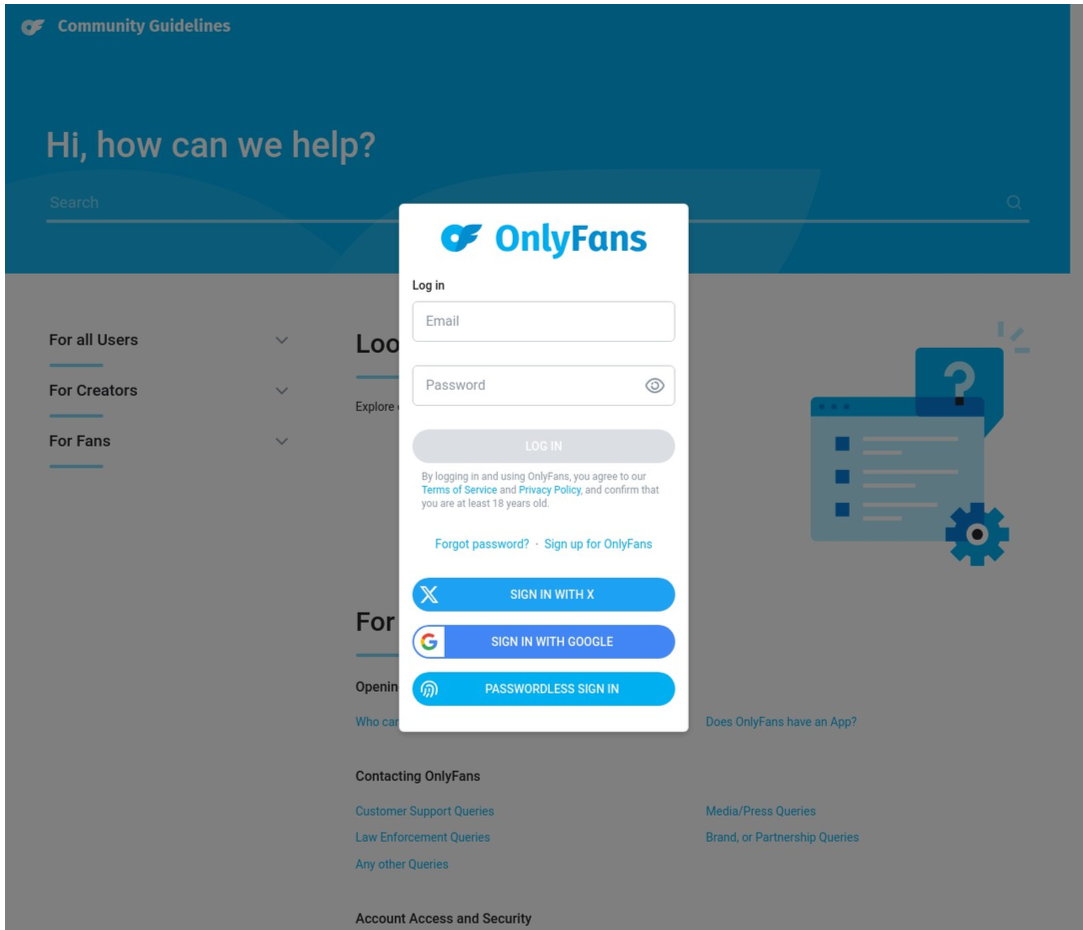
The flow starts the moment you type card details into the payment screen. Before any subscription activates, the system sends a small authorization request to your bank. That request is the verification hold, and it is typically $0.10.
Your bank sees an incoming charge and either approves or declines it. When it approves, the amount is frozen rather than transferred. No money leaves your account in a settled sense at this stage.
Only after the hold clears does the real subscription charge get processed. If you chose a paid page, that charge is the creator’s listed price, and the platform fee of 20% comes out on the creator’s side, not yours.
| Event | Typical Timing | Subscriber Action |
|---|---|---|
| Card details entered | Immediately | Confirm billing address matches the card |
| Verification hold placed | Within minutes | Check for a $0.10 pending item |
| Hold released | 1-5 business days | No action needed; it disappears on its own |
| Subscription charged | After hold clears | Confirm the amount matches the page price |
| Access granted | Same day as charge | Verify the subscription shows as active |
Why OnlyFans Uses a Verification Hold
A small authorization is one of the cheapest ways to check that a payment method actually works. Without it, every failed subscription attempt would waste processing resources and frustrate both sides.
Age and Fraud Controls
The hold also supports age gating. Platforms that host adult content must be able to demonstrate that payment instruments belong to verified adults. A card check is part of that chain.
Beyond the mechanical side, holds reduce fraud and chargeback exposure. A stolen card number is far more likely to fail a tiny authorization than to sail through a full subscription charge.
- Fraud reduction: bogus card numbers usually fail a micro-authorization quickly.
- Age gating: a working payment method helps confirm the account holder is an adult.
- Method validation: expired or closed cards get caught before a real charge is attempted.
- Regional compliance: some markets require an authorization step before recurring billing begins.
- Chargeback prevention: verified cards are less likely to be disputed later.
How the $0.10 Hold Appears on Your Statement
Statement Visibility
On most statements the hold shows as a pending transaction with a merchant descriptor that may look unfamiliar. That is normal for authorization-only charges, and it will not settle.
Bank apps display pending items differently. Some show the amount immediately, others hide it until settlement, and a few group it under a generic category. None of these variations indicate a problem.
Typical Timeline
- A pending charge notification appears, often within minutes of adding the card.
- The line item is labeled as temporary or pending, not as a completed purchase.
- The authorization is released by the bank, and the pending flag clears.
- The real subscription charge posts separately, with the creator’s page name attached.
- The subscription becomes active once that second charge settles.
Timing: From Hold to Refund to First Real Charge
The hold almost always releases within one to five business days. Weekends and holidays can stretch that window, and some banks take a full week during peak periods.
The subscription charge itself is a separate event. It does not wait for the hold to disappear from your statement in every case, but it does wait for the authorization to be approved.
Subscription Rules
- If you cancel during the paid period, auto-renew stops, and access continues until the period ends.
- Raising a price on an existing subscription also stops auto-renew, keeping access intact through the already-paid window.
- Promotional first months can sit below the $4.99 base minimum, for example a $3 first month.
- The base price of a paid page stays between $4.99 and $49.99, with most pages clustering in the $5-$10 range.
When Holds Fail and What That Signals
A declined hold is not a rejection of you as a customer. It is a signal that the bank or the card has a restriction worth investigating.
Prepaid cards are the most common failure point because many issuers block authorization-only requests from adult merchants. Regular debit and credit cards generally pass without issue.
A hold can also fail because the card itself is stale. An expired date or a billing address that no longer matches the one on file is enough to trigger a decline on a ten-cent request.
- Prepaid card restrictions: many prepaid issuers reject adult merchant authorizations outright.
- Bank blocks on adult merchants: some institutions flag the category by default.
- International card limits: foreign cards sometimes fail domestic authorization checks.
- Expired credentials: an outdated expiry date or changed billing address will decline.
- Daily spending caps: a low cap can reject even a $0.10 authorization.
Tip: if your hold declines twice, stop retrying. Repeated failed authorizations can trigger a temporary block on the card, and calling the bank first saves hours of confusion.
Protecting Your Payment Data During Signup
The hold process involves transmitting card data, so the connection you use matters. A private network is safer than a shared one, and public Wi-Fi should be avoided during checkout.
Transaction alerts are a practical safeguard. Enabling them means you see the pending hold and the real charge the moment each appears.
Weekly statement monitoring catches anything unexpected early. If a charge appears that you do not recognize, you can dispute it while the details are still fresh.
Security Best Practices
- Use a private network instead of public Wi-Fi during checkout.
- Avoid entering card details on shared or borrowed devices.
- Enable transaction alerts with your bank before you subscribe.
- Verify the site URL before typing any payment information.
- Monitor statements weekly for the first month of a new subscription.
Account-level settings reinforce the same idea. Two-step authentication on the account itself means a leaked password alone cannot unlock stored payment data or start new charges.
Pay-per-view unlocks can run up to $50, paid chat commonly sits at $3-$5 per message, and tips can reach $100. None of those numbers involve the verification hold, which stays at $0.10 regardless.

Comparing Verification Practices Across Fan Platforms
Most subscription platforms validate a new payment method before the first real charge. The methods differ, but the goal is the same: confirm the card works and belongs to the account holder.
The table below summarizes how three common platforms handle first-time validation. Amounts reflect typical authorization behavior rather than published policy.
| Platform | Verification Method | Hold Amount |
|---|---|---|
| OnlyFans | Micro-authorization on card entry | $0.10 |
| Fansly | Micro-authorization or zero-amount check | $0.00-$1.00 |
| Fanvue | Card validation at first purchase | Varies by processor |
Billing Clarity and Discovery
A pattern worth noting: platforms with stricter age-gating rules tend to run a visible authorization rather than a silent check. That visibility is what generates most of the confusion.
Subscribers who compare platforms often weigh billing clarity against discovery options. There is no built-in directory on the platform itself, which is why discussions about the best way to promote onlyfans reddit threads come up so frequently among creators and fans alike.
The ranking methodology behind BestOnlyFans treats billing transparency as one of several signals, alongside pricing structure and account safety features.
Planning Your Budget Around the Hold Timing
The hold is not a fee, so it should not be counted as spending. Treat it as a temporary reservation that disappears without any action from you.
Expect minor statement oddities for three to seven days after signup. Two line items may appear briefly, one pending and one settled, before the pending one vanishes.
Budget Reconciliation
Reconciling your monthly total before the hold clears will make the number look higher than it is. Wait for the pending item to drop off before judging the real cost.
Do not count the $0.10 hold as spent money in your budget. Expect statement weirdness for 3-7 days after adding a card, and wait for the pending item to clear before reconciling monthly totals. Once the hold clears, your budget reflects only the actual subscription price. Any tips, pay-per-view unlocks, or paid messages you choose to send are separate line items. A $4.99 base subscription and a $10 one are easy to compare once the temporary item is gone.
Free pages set the price to $0 and earn via PPV messages and tips instead. The creator keeps 80% of all revenue after the platform fee.
FAQ
Does the $0.10 verification hold mean I was secretly charged extra?
No. The hold is a temporary authorization, not a fee. It is released by your bank within a few days, and the amount is never transferred to the platform.
How long until the hold disappears from my bank statement?
Most banks release the pending item within one to five business days. Weekends, holidays, and slower processing queues can extend that to about a week.
Can I use a prepaid card that fails the OnlyFans verification hold?
Usually not. Many prepaid issuers block authorization requests from adult merchants, so the hold declines even when the card has funds available. A standard debit or credit card works more reliably.
What happens if my bank blocks the hold for merchant category reasons?
The decline comes from the bank’s policy, not from insufficient funds. Contacting the bank to lift the block on that merchant category is the standard fix, after which the authorization can be retried.